


Ask anyone who owns a digital photo frame what it actually does, and the answer rarely changes: it shows photos. A relative uploads one from another city, the picture appears on the screen, and it sits there until the next one replaces it.
The frame has never been short of memories. What it has been short of is anything to do with them — no way to build on a moment, revisit it, or let it become anything other than a still image on a loop.
That gap is what the current wave of consumer AI has started to close, and it is why Apple’s HomeView announcement on October 13 is worth reading twice.
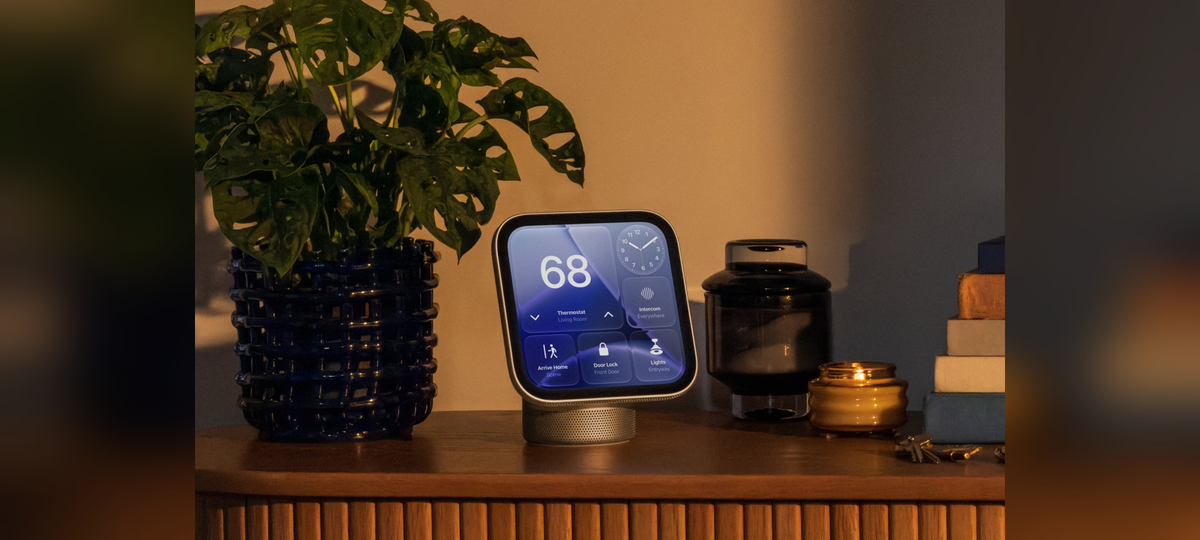
HomeView combines a 7-inch Liquid Retina display with Siri AI, FaceTime, Messages, shared photos, entertainment, and smart-home controls. It can recognize up to six people in a household and personalize the experience for each user, with availability beginning November 13.
It also happens to work as a digital photo frame. Apple’s Photos face supports shared albums and Portrait-style depth effects, allowing family members to help fill the screen with photos from near or far.
When a general-purpose home display can already show family photos, what is a dedicated digital photo frame supposed to become next?
The short answer is not a smaller smart-home tablet. The next frame does not need to win at controlling the house; it needs to go deeper into what happens to a memory after it arrives. That is a different problem entirely, and it is the one worth spending time on.
HomeView is designed to run the home
HomeView’s ambitions are considerably bigger than photography.
Siri AI answers everyday questions, and when paired with an Apple Intelligence-enabled iPhone or iPad, it can draw on personal context from apps such as Messages and Calendar to provide more personalized responses and take actions across apps.
It also handles FaceTime, Messages, Intercom, music, video, recipe guidance, Find My, and smart-home controls for compatible lights, thermostats, locks, blinds, and cameras.
In other words, Apple HomeView is not really trying to reinvent the digital photo frame. It is trying to become the screen that runs the entire home.
Photos are one HomeView experience. For a digital frame, they are the starting point.
This is the distinction that matters most for the category.
On HomeView, family photos sit next to everything else — smart-home controls, FaceTime, timers, Messages, Apple Music, and other everyday tools. Photography is one experience among many.
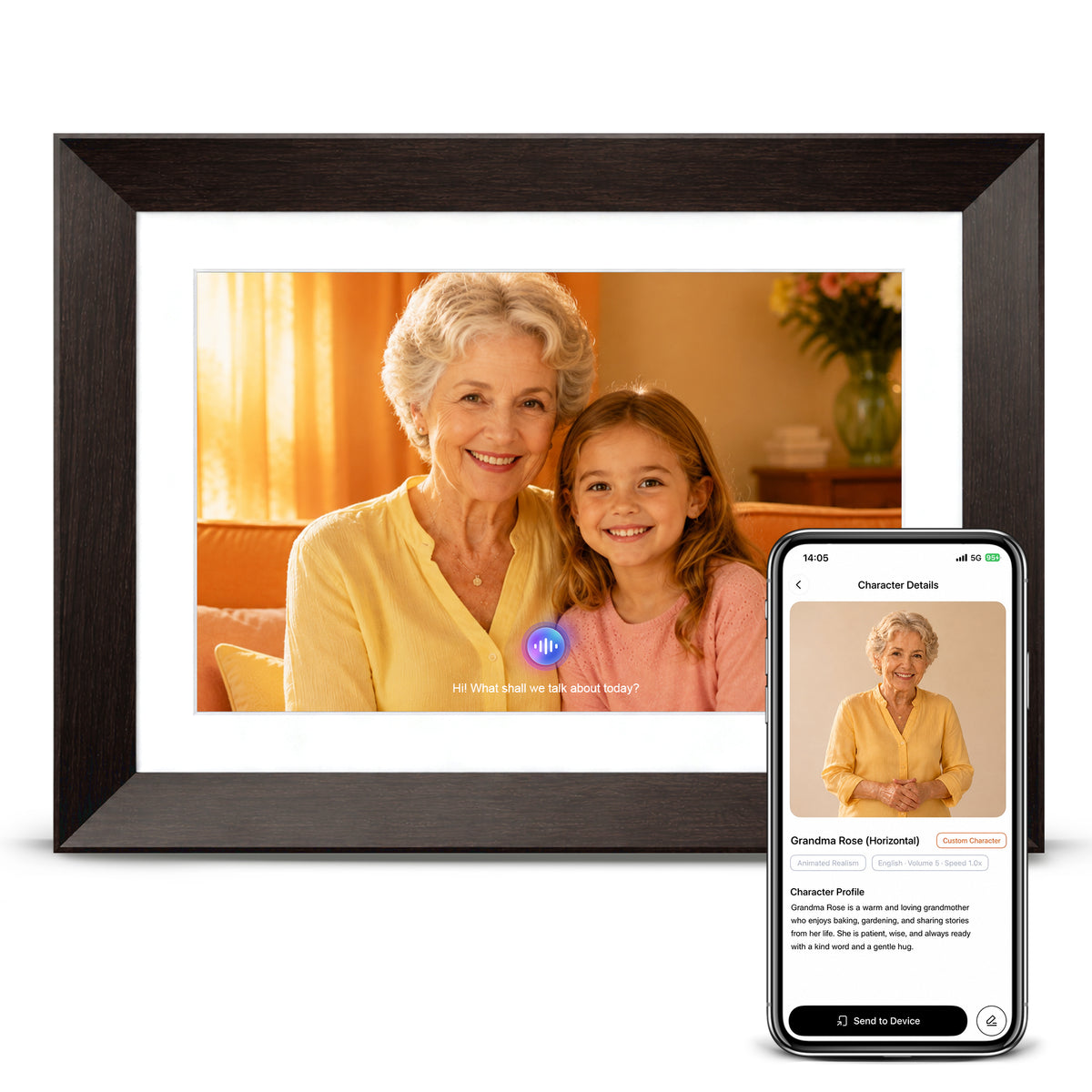
On an AI digital photo frame like Vinabot , the experience starts with the content itself.
Family members can share photos and videos remotely. AI Creation makes it possible to create or transform new photos and videos from existing content or a new idea, while Mixed Play brings uploaded photos and videos together with AI-created photos and videos in one continuous display experience.
A digital photo frame does not have to become a thermostat controller or a video-call device to justify its place on the wall. Its question is narrower — and arguably more interesting: what more can happen to a memory once it reaches the frame?
From displaying a face to interacting with one
This is where AI starts to change what a digital photo frame actually is.
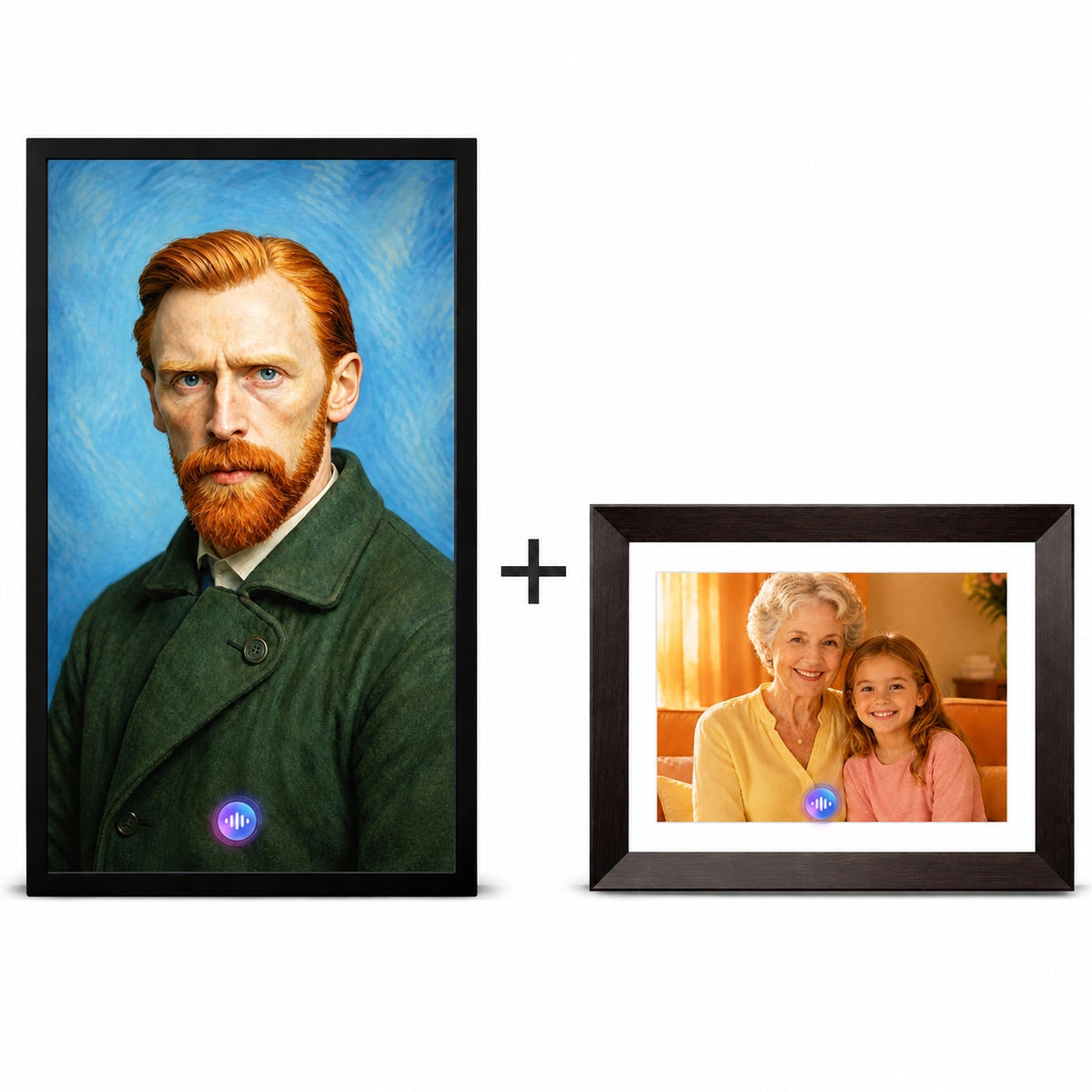
On Vinabot, selected photo-based content can become an AI Companion — an experience with movement, voice, and conversational interaction.
Where supported, Voice Clone can provide a personalized Cloned Voice, while conversational memory is designed to make repeated interactions feel more continuous over time.
Vinabot also includes a free AI Voice Assistant, adding voice-based interaction with the frame itself without requiring a membership.
HomeView uses AI around the home: personal context, communication, entertainment, and smart-home control.
Vinabot uses AI around the content: photos, videos, voices, AI-created content, and interactive AI Companion experiences.
Two devices can live in the same home for completely different reasons
For someone already deep in the Apple ecosystem who wants one device for smart-home control, communication, and entertainment, HomeView has a clear role. Its 7-inch display, FaceTime, Siri AI, and Apple Home integration make that purpose easy to understand.
Vinabot is the more specialized option.
Its 10.1-inch model and 21.5-inch model are designed around visual display, including larger wall-mounted setups. Vinabot has no camera and is not positioned as a smart-home control center.
Instead, its focus is what stays visible in the room over time: family photos, videos, AI-created content, and interactive AI Companion experiences.
The next digital frame does not need to shrink into a smart-home tablet. It can become a more expressive frame.
Frequently Asked Questions
Does Vinabot have a camera?
No. Vinabot does not have a camera and is not designed as a smart-home monitoring hub. Its focus is visual display and interactive content.
What sizes does Vinabot come in?
Vinabot is available in 10.1-inch and 21.5-inch formats, designed for everything from desks and bedside spaces to larger rooms and wall-mounted display.
The bottom line
Apple has introduced a home screen built to do much more — a meaningful shift in how AI may live inside the home.
But there is still a quieter, more focused place for a device whose job is to make the things people care about feel more alive. That is the bet behind Vinabot.
See what an AI Talking frame can become
Explore how Vinabot brings AI Creation, AI Companion, and voice interaction into a new kind of frame experience.




Leave a comment
All comments are moderated before being published.
This site is protected by hCaptcha and the hCaptcha Privacy Policy and Terms of Service apply.