


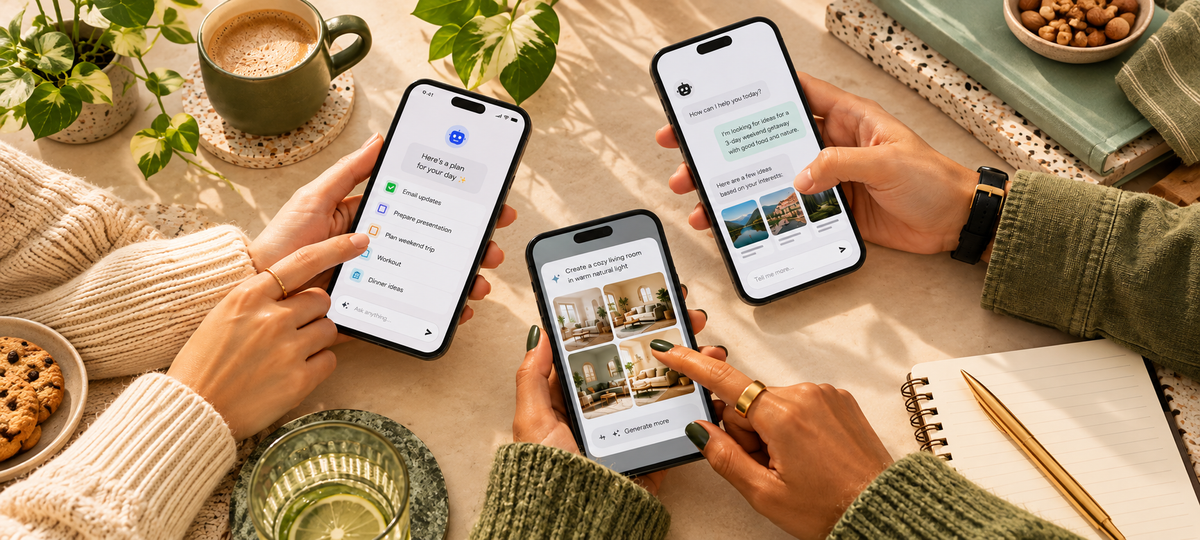
Picture asking an AI to plan a trip, work through an overflowing inbox, or help deal with a bill — then letting it keep working after you close the app.
That is the premise behind Meta Muse , and it is one of the clearest signals yet of where consumer AI is heading.
Muse is not limited to answering questions. Meta positions it as a personal AI agent that can browse the web, connect to apps, complete multi-step tasks, make purchases, manage reminders and goals, and continue working in the background.
According to Meta’s September 2026 announcement , Muse runs inside a dedicated Muse Secure VM and asks for approval before sensitive actions such as sending an email or making a purchase.
But getting things done is only one direction for consumer AI. What should AI do when the goal is not efficiency, but memory, expression, or connection?
AI is moving from answering to doing
The first wave of consumer AI was straightforward: you ask something, and the AI responds.
Personal AI agents change that relationship. Instead of only producing an answer, they can take an outcome — book a reservation, monitor a price, organize a schedule, prepare a document — and work through the steps required to get there.
Muse can work across connected services, browse the web, create documents and images, make purchases, set reminders, track goals, and continue working after the app is closed.
Meta also says Muse can remember information that matters to the user and use that context to make future suggestions more personal. For productivity, this is a genuinely powerful direction.
But not every AI experience has to complete a task
That leaves another question worth asking: what should AI be doing when nobody needs a flight booked, an inbox cleared, or a form filled out?
Some of the most personal objects in a home are not productivity tools at all. They are photographs, albums, keepsakes, videos, and familiar voices.
Their value does not come from making us faster. It comes from the memories and people attached to them. That creates room for a very different kind of AI experience.
Where Vinabot takes a different path
Vinabot is not trying to book flights, negotiate bills, or operate websites on your behalf.
It begins with something much more familiar: the digital photo frame .
Photos and videos can still be shared remotely through the Vinabot app, but AI adds new ways to experience the content after it reaches the frame.
With AI Creation, users can start from an existing photo or a new idea to create or transform photos and videos. Mixed Play then combines uploaded photos and videos with AI-created photos and videos in one continuous display experience.
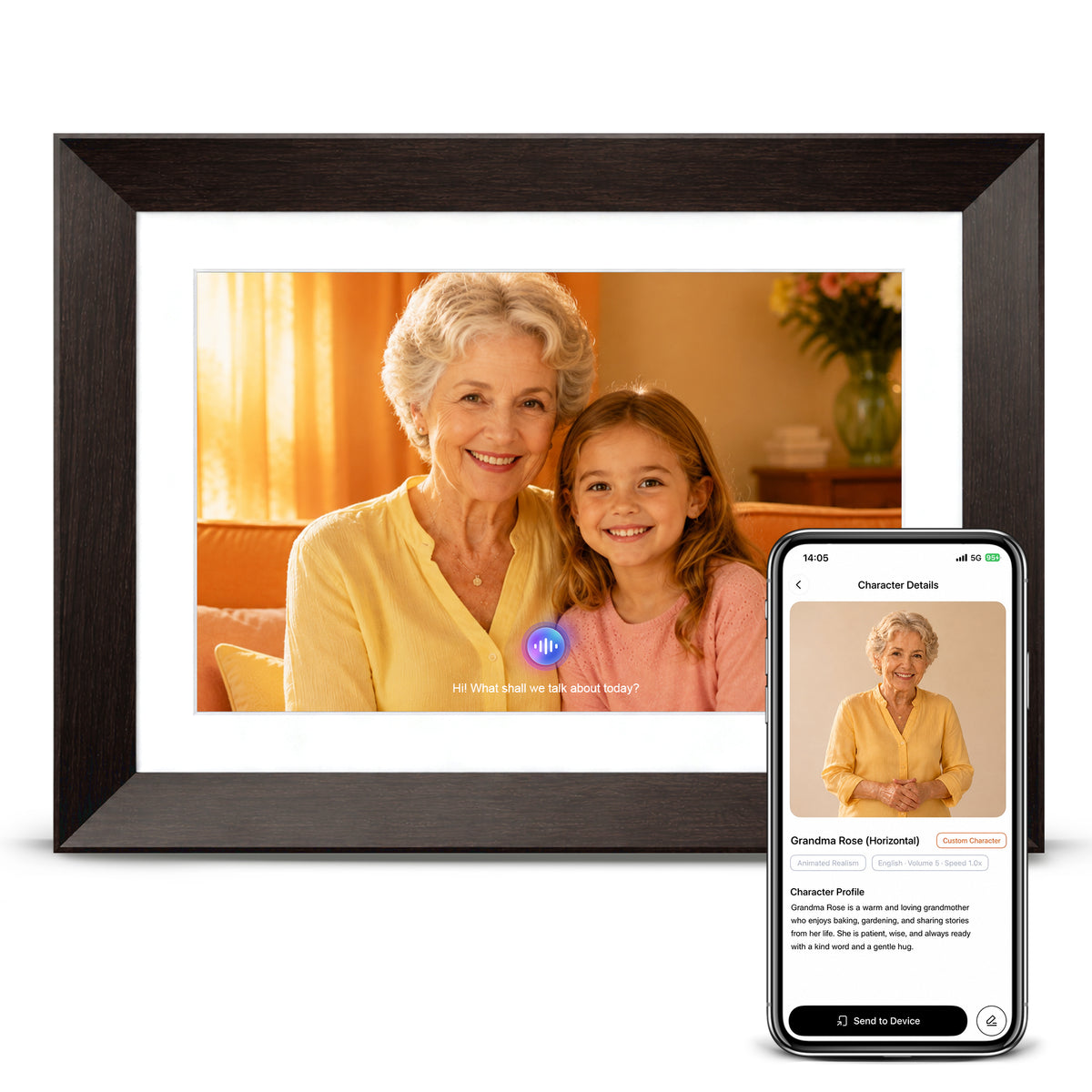
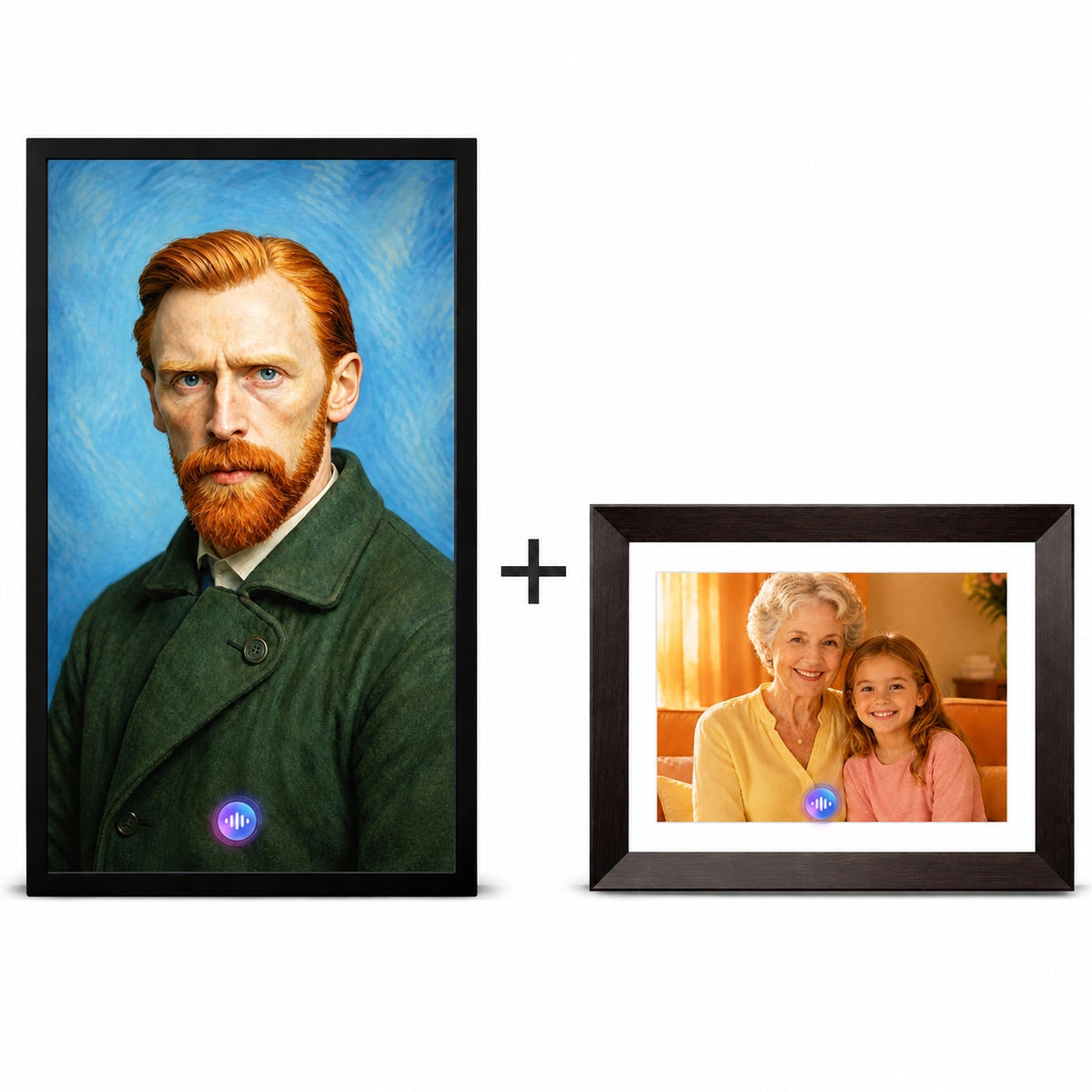
Selected photo-based content can also become an AI Companion with movement, voice, and conversational interaction.
Supported AI Companion experiences can use Voice Clone for a personalized Cloned Voice, while conversational memory is designed to make repeated interactions feel more continuous over time.
Vinabot also includes a free AI Voice Assistant, adding another way to interact with the frame by voice without requiring a membership.
Muse is built around action: tasks, plans, apps, browsing, purchases, and goals.
Vinabot is built around content: photos, videos, voices, AI-created content, and interactive AI Companion experiences.
Delegation and interaction are two different AI futures
Muse and Vinabot are more interesting when read together than when treated as direct rivals.
Muse points toward a future where software quietly takes more work off our plates. The AI knows the goal, finds the steps, and handles more of the execution.
Vinabot points somewhere else: AI inside a physical object whose purpose is not primarily productivity, but memory and interaction.
One turns intentions into actions. The other explores what happens when photos, voices, and familiar content become more expressive and interactive.
As AI moves beyond the chat window, the bigger question may not be which direction wins — but how many different roles AI will begin to play in everyday life.
Frequently Asked Questions
What is a personal AI agent?
A personal AI agent can take actions on a user’s behalf rather than only responding to individual questions. Meta Muse, for example, can browse the web, connect to apps, complete multi-step tasks, and keep working in the background with user oversight.
What makes a digital photo frame an AI digital photo frame?
A conventional digital photo frame mainly displays uploaded photos and videos. An AI digital photo frame can add creation and interaction around that content. On Vinabot, users can create or transform photos and videos, use AI Companion experiences, interact by voice, and use Mixed Play to combine uploaded and AI-created visual content.
What do AI Creation and Mixed Play do?
AI Creation allows users to start with an existing photo or a new idea and create or transform photos and videos. Mixed Play combines uploaded photos and videos with AI-created photos and videos in one continuous display experience. AI Companion experiences remain separate from Mixed Play.
Can a photo become something you can interact with?
On Vinabot, selected photo-based content can become an AI Companion with movement, voice, and conversational interaction. Supported experiences can use Voice Clone, while conversational memory is designed to make interactions feel more continuous over time.
Does an AI digital photo frame need to be a smart-home hub?
No. Vinabot has no camera and is not positioned as a smart-home control center. Its 10.1-inch and 21.5-inch formats are designed around visual display, including larger wall-mounted use with the 21.5-inch model.
The bottom line
The “AI handles the work” future is already taking shape, and Muse is a strong example of how quickly personal agents are moving from answering questions to taking action.
But not every AI experience needs to carry a to-do list. Some can focus on the things people already care about — photos, videos, voices, stories, and memories — and give them new ways to move, speak, and interact.
See what an AI Talking frame can become
Explore how Vinabot brings AI Creation, AI Companion, and voice interaction into a new kind of frame experience.



Leave a comment
All comments are moderated before being published.
This site is protected by hCaptcha and the hCaptcha Privacy Policy and Terms of Service apply.